Electricity quietly powers nearly every routine inside a modern home—until something stops working. Outages, price shifts, and changing energy demands can disrupt that stability without warning. More homeowners are now looking beyond temporary fixes toward solutions that integrate seamlessly into daily life. Home battery backup systems offer exactly that: resilience and efficiency, not just emergency power. This article explores how energy storage enhances everyday living through familiar, real-world scenarios.

1. Life Continues During Outages
Lights Stay On, Wi-Fi Keeps Working
Unexpected power interruptions often create an immediate sense of disruption, even when they last only a few minutes. Rooms darken, routers shut down, and the simple flow of daily activity suddenly pauses. A home equipped with battery backup behaves very differently under the same conditions. Lighting circuits remain active, and internet connectivity continues without manual intervention. This continuity helps maintain normal tasks such as remote work, online learning, or routine communication. Instead of reacting to inconvenience, occupants may barely notice that the grid has gone offline. Over time, this reliability reframes outages as minor events rather than household emergencies.
Fridge Runs, Phones Charge Normally
Food storage and personal devices represent two of the most immediate concerns during a blackout. Refrigerators protect groceries that may represent a high cost and planning, while phones provide essential communication and information. Without backup power, both quickly become sources of anxiety. A properly sized battery system sustains these everyday necessities automatically, preserving both convenience and peace of mind. Appliances continue operating within expected parameters, and charging routines remain unchanged. There is no need to juggle outlets, disconnect devices, or prioritize one need over another. The experience mirrors normal grid operation, which is precisely the goal of modern backup design.
2. Electricity Bills Shrink
Store Cheap Power for Peak Hours
Electricity pricing in many regions varies throughout the day, reflecting shifts in demand across the grid. Peak periods often coincide with the hours when households rely most heavily on power, such as evenings. The home battery backup system introduces flexibility by allowing energy to be stored when rates are lower. That stored power can later be used when prices rise, reducing overall utility expenses. This approach transforms energy storage into a financial tool rather than solely a resilience measure. The savings may appear incremental at first, but tend to accumulate over months and years. As a result, battery systems increasingly serve dual roles in both protection and cost management.
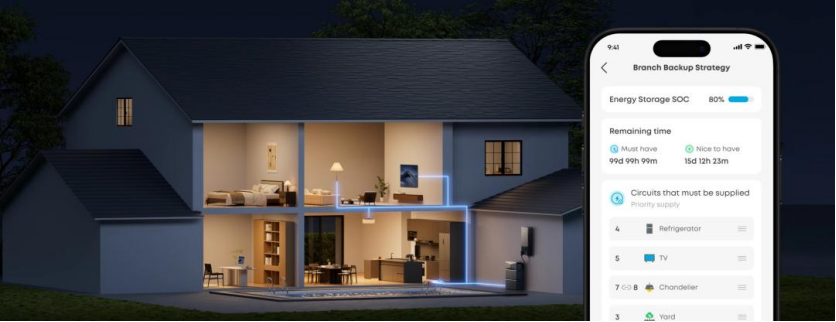
Keep Solar Energy for Nighttime Use
Solar panels generate electricity only when sunlight is available, which does not always align with household consumption patterns. Without storage, excess daytime production may be exported or underutilized. Battery integration changes this dynamic by retaining solar energy for later use. Evening lighting, entertainment systems, and kitchen appliances can then operate on stored renewable power. This shift increases self-consumption and reduces reliance on grid electricity after sunset. The home’s energy profile becomes more balanced and predictable across a full day. In practical terms, renewable generation begins to support routines that previously depended entirely on external supply.
3. The House Stays Quiet
Noise often becomes an overlooked factor when discussing backup power, yet it strongly influences comfort. Traditional solutions may involve mechanical equipment that activates audibly during operation. While effective, such systems can alter the home’s atmosphere, especially during nighttime use. Battery-based backup, by contrast, operates with minimal sound, preserving a calm indoor environment. This quietness proves particularly valuable in settings where concentration, rest, or relaxation is important. Household members can sleep, work, or converse without the background hum associated with many alternatives. Over extended outages, the difference between silent and noisy power becomes surprisingly significant for overall well-being.
4. Peace of Mind Becomes Permanent
No Scrambling Before Storms
Severe weather warnings often trigger hurried preparation, ranging from charging devices to securing alternative light sources. These actions, while sensible, add urgency and stress to already uncertain situations. A home supported by battery backup experiences a different form of readiness. Stored energy and automated management features maintain a constant state of preparation without requiring last-minute intervention. Critical circuits remain protected as part of normal operation rather than emergency response. This stability simplifies household planning and reduces anxiety associated with unpredictable conditions. Preparedness becomes embedded in infrastructure instead of behavior, which is a meaningful psychological shift.
Family Stays Safe and Comfortable
Power continuity directly affects not only convenience but also safety and physical comfort. Heating, cooling, refrigeration, and medical devices increasingly depend on uninterrupted electricity. In homes designed around whole-home resilience, battery systems coordinate these needs without forcing difficult compromises. Solutions such as the Anker SOLIX E10 illustrate this category, offering strong output capabilities, including a 10 kW turbo mode suitable for demanding household loads. Such performance helps sustain essential appliances and sensitive equipment simultaneously during grid failures. The practical effect is an environment where routines, health considerations, and comfort levels remain stable. Instead of reacting to outages, occupants remain focused on normal daily life.
Conclusion
Energy storage fundamentally alters how households experience both electricity reliability and consumption. What once functioned purely as emergency equipment now contributes to routine comfort, cost efficiency, and convenience. Home battery backup systems reduce the disruptive impact of outages while enabling smarter use of available energy resources. Their value extends beyond rare events, influencing daily decisions and long-term financial outcomes. As homes grow more dependent on digital connectivity and powered systems, consistent electricity becomes central to lifestyle quality. Battery backup therefore emerges not as a luxury feature but as a practical adaptation to modern living conditions.